
How an Australian investment advisory firm grew ChatGPT‑driven traffic 1,164% by structuring its expertise for AI search
Transforming the early principles of Generative Engine Optimisation (GEO) into Dual-Intelligence Architecture (DIA) – a practical, structured content system for the AI era.
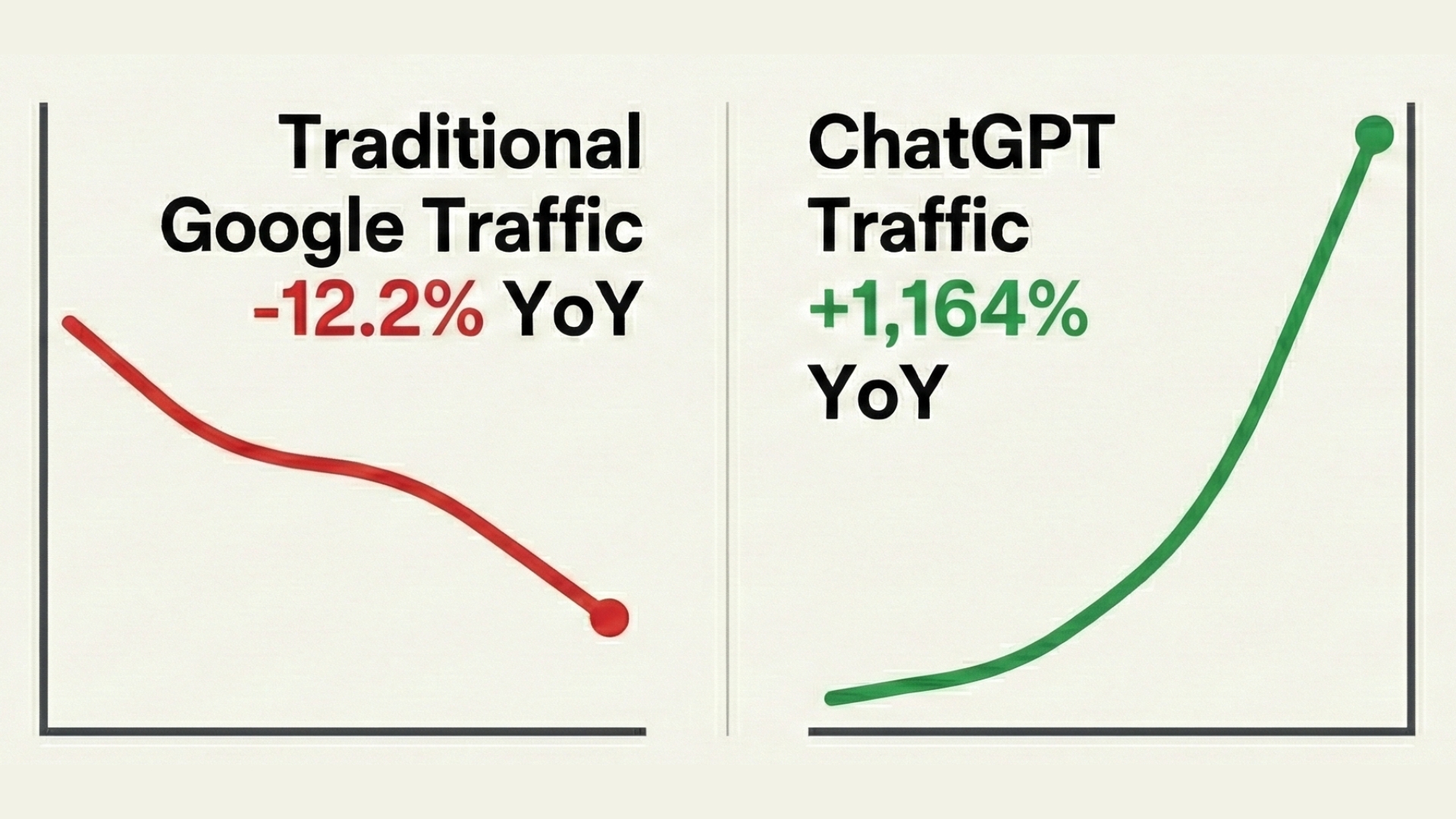
Based on Google Analytics (GA4 ) data, Jan–Nov 2024 vs Jan–Nov 2025.
Brand details withheld due to competitive sensitivity.
The Shift – and the opportunity
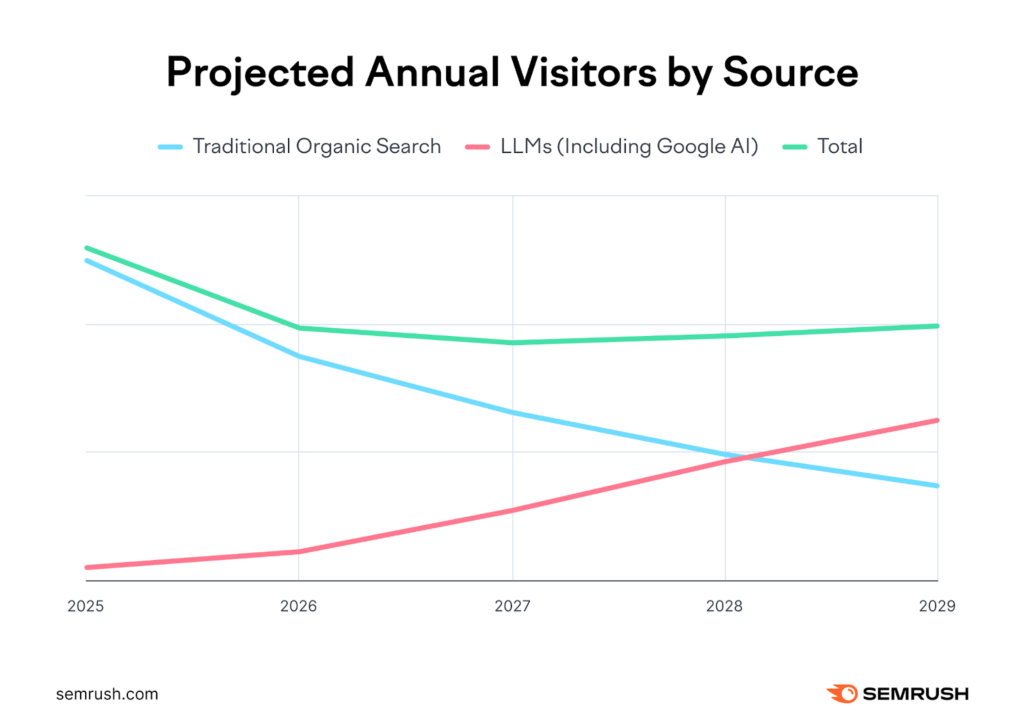
By the start of 2025, it was clear AI would dramatically shift how professional services firms get found – and chosen – online.
As traditional Google traffic dropped across the web, and the SEO industry debated what Generative Engine Optimisation (GEO) meant in practice – this Australian investment advisory firm moved early.
They wanted to:
- Stay ahead of how potential customers are moving from traditional search to AI tools when researching investment topics and comparing advisory firms
- Make sure their content – and brand name – were cited when ChatGPT, Google AI Overviews / AI Mode, and Perplexity answered questions in their core focus areas
- Build the foundation to turn AI search into a deliberate engine for qualified enquiries and deeper client relationships.
The approach
The strategy focused on content designed to make the client the primary source AI systems cite when users ask questions in the client’s key topic areas.
Each piece was built to:
- Demonstrate real-world experience and evidence, not just opinions
- Translate expertise into agenda-setting content that is useful to their target customers
- Structure insights using evolving Generative Engine Optimisation (GEO) principles so AI systems can parse, attribute and confidently recommend them
- Earn media and industry coverage that reinforces authority
The results
Traffic divergence (YoY)
| Period | Traditional Google | AI Search |
| Full Year (Jan–Nov) | -12.2% | +650% |
| Jun–Nov | -27.9% | +372% |
| Oct–Nov | -39.0% | +182% |
Traditional Google visibility is sliding in line with broader digital trends, while the client’s AI referrals are rapidly becoming an important acquisition channel.
ChatGPT specifically
| +1,164% YoY growth |
ChatGPT alone is now a vital new traffic source for the firm, growing faster than any other channel.
Competitive position
Note: The figures below reflect only trackable referrals and serve as leading indicators. True AI traffic volume is significantly higher – see the ‘Dark AI’ section below.
| Client | Real Estate avg* | All Industry avg* | |
| AI share of total website traffic | 2.03% | 0.30% | 0.28% |
| Client lead | — | 6.8× higher | 7.2× higher |
Source: *Sector and industry averages from Ahrefs traffic share across industries (Oct 2025): https://chatgpt-vs-google.com/
Client is 7× ahead of the market on AI visibility. Structured and authoritative content is elevating the client well above their competition.
Engagement quality (November 2025)
| Traffic Source | Avg time on page |
| AI referrals | 69.4s |
| Google organic | 60.8s |
| Difference | +14% |
AI traffic isn’t just growing, it’s highly engaged.
Visibility proof
When a potential customer asks ChatGPT ‘best property investment advisor Melbourne’, the client is the answer. This was in a temporary chat without personalisation.
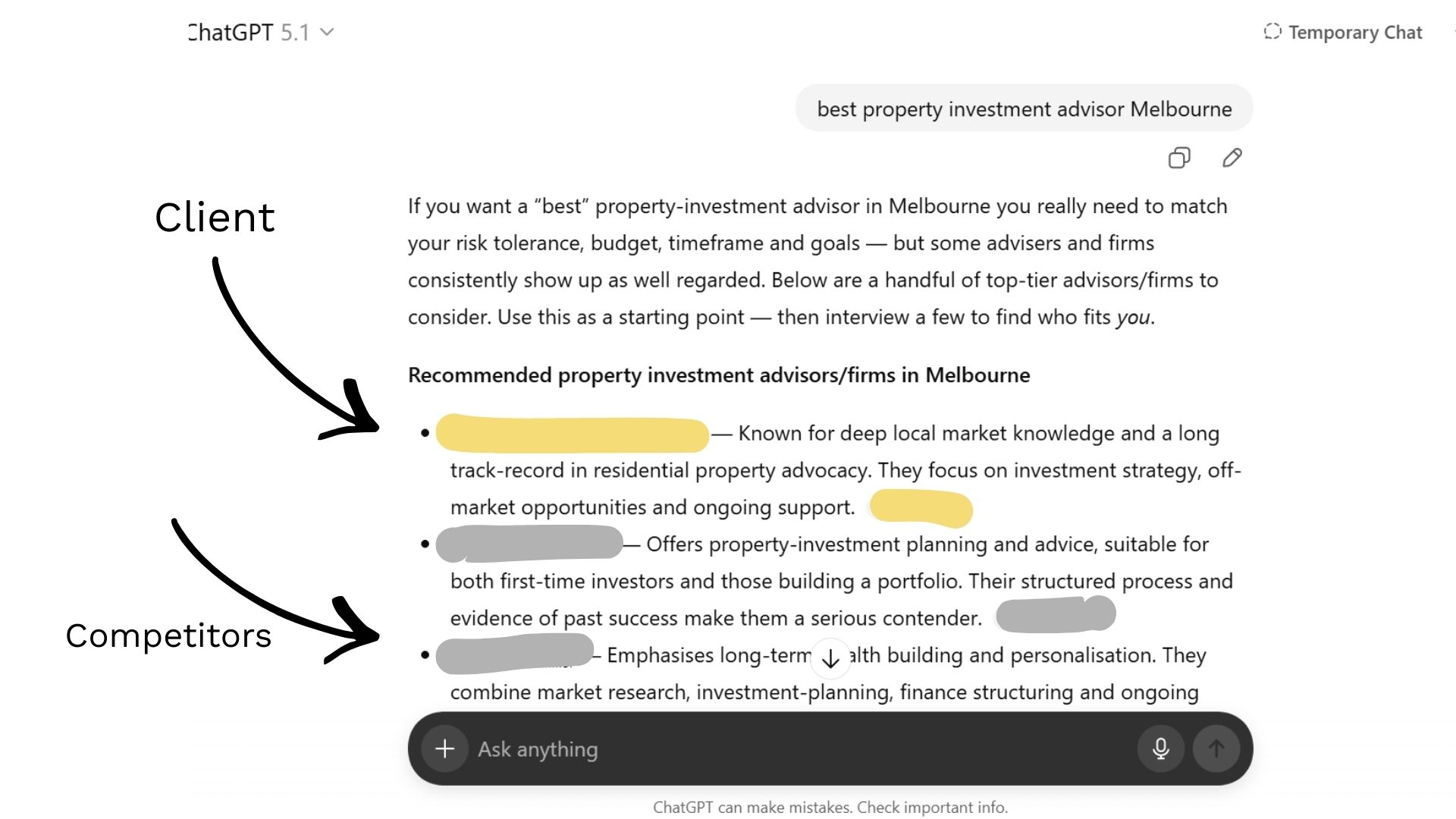
Brand details withheld due to competitive sensitivity.
Media coverage
The client’s content earned coverage in Australian Financial Review, Herald Sun, and industry publications like SQM Research – third-party endorsements that reinforce brand authority with both AI systems and human audiences.
Dark AI: Why the visible numbers are only the surface
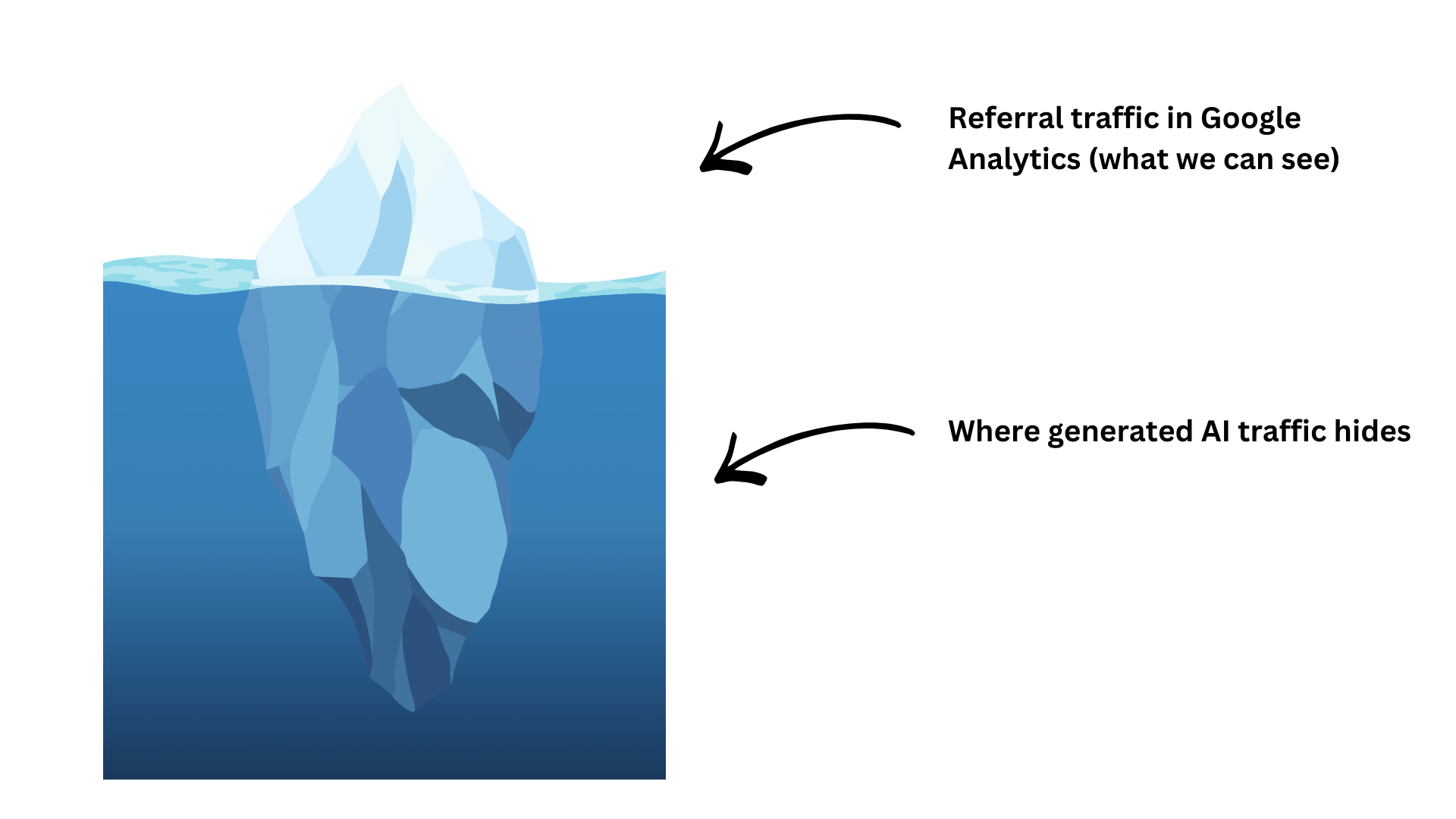
The AI traffic you can see in GA4 (the numbers above) is only a fraction of the client’s true AI‑generated traffic.
A significant share of AI search generated visits never show up as ‘AI’ in analytics and can’t be cleanly attributed.
Where AI traffic hides:
- Invisible referrals – Many AI clicks arrive with referrer data stripped and are lumped into Direct traffic (for example, from mobile apps, private modes, or in‑app browsers).1 2
- AI bundled into Organic – Google counts its own AI results as Organic Search; AI Overviews and AI Mode are folded into traditional organic metrics. This inflates organic figures and understates AI search. 3
- Zero‑click branded journeys – Someone discovers the firm in an AI answer (for example, a ChatGPT recommendation), then later searches the brand name or types the URL, so the visit shows up as Direct or branded Organic, not AI.4
The compound effect on traditional search
The content built for AI is also among the top-performing pages in traditional Google search.
Because these assets satisfy both human intent and machine logic, AI optimisation compounds traditional search performance rather than cannibalising it.
The methodology
Based on these results, we have consolidated this approach into a comprehensive framework we call Dual-Intelligence Architecture, a structured content system that puts high level GEO principles into practice – and is now being deployed for the firm’s 2026 content strategy and available to new clients.
Audience research
Identify the areas of interest, problems, and solutions your target customers are asking AI about.
Entity bridging
AI systems understand the world through entities – people, companies, concepts, publications. Map your brand’s entities against the topics AI already recognises in your space, identifying where you fit, where the gaps are, and what you can build upon.
On-page
Structured content that connects your brand entities to established entities in the AI knowledge base – and builds on them with original insights that add new value to the space, through narrative, structure, and logic.
Behind the page
Schema markup that explicitly tells AI (in machine language) what your entities are, how they connect to trusted sources, and what new knowledge your brand contributes.
Off-page
Digital PR to earn third-party citations and endorsements.
Amplification
Social and community signals to reinforce visibility.
Ready to understand your AI search position?
Discover how the leading AI models perceive your brand – and where you can gain the advantage.